Moinhos do Dão
Moinhos means mills. The name comes from the seven watermills that once stood along the River Dão. They used the river to grind grain into flour for the nearby villages.
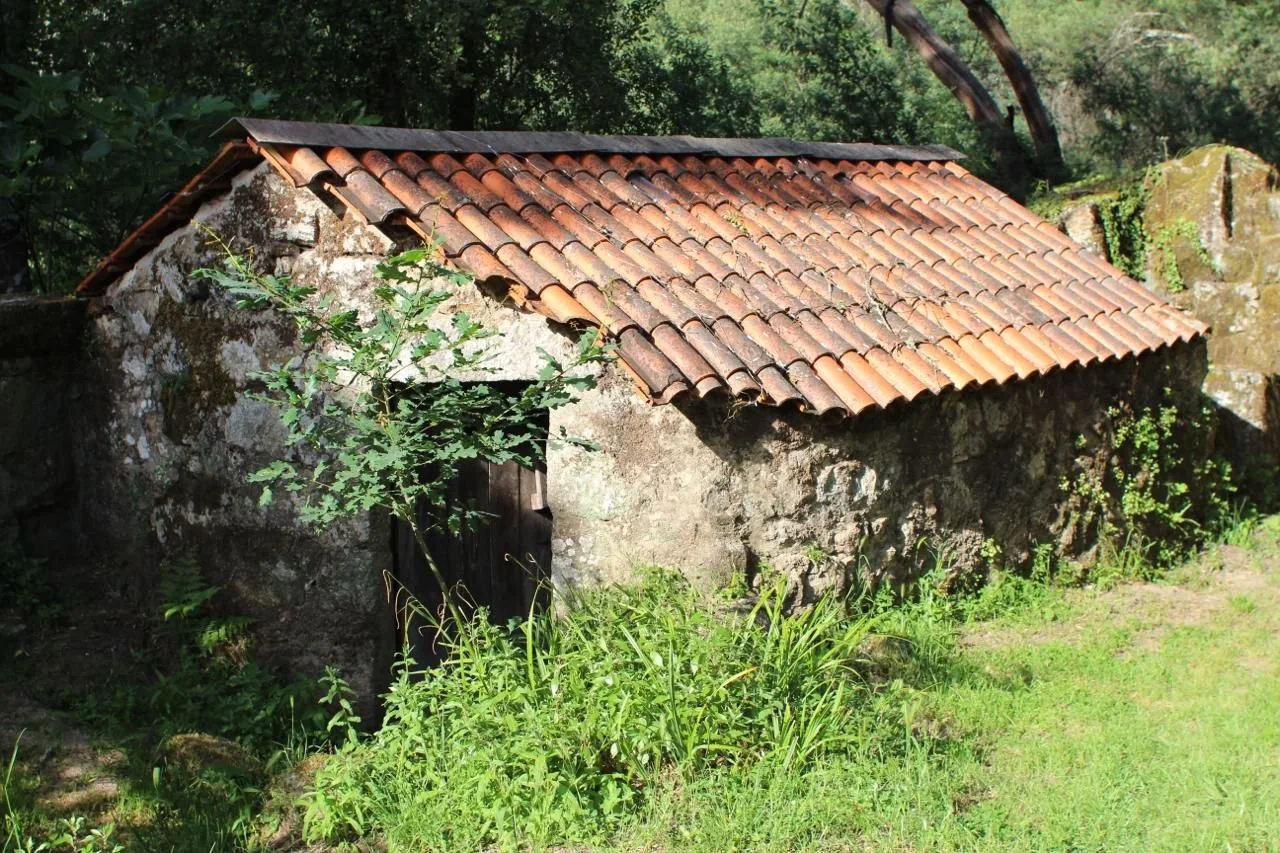
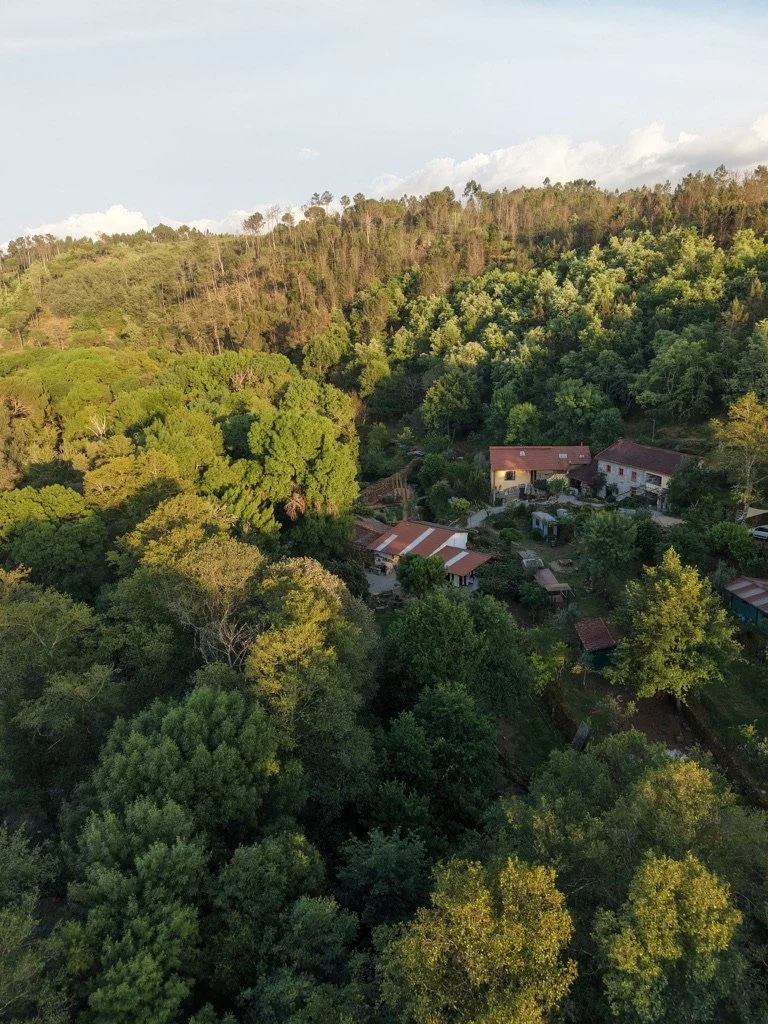
You can still see signs of this history around the farm: old millstones, stone buildings, water channels and the small dam. Some things are easy to see, while others you only notice once you know what to look for.
The water system is still used today. We adapted some of the old waterways to produce hydroelectricity, so the river that once powered the mills now also helps power the farm.
The River Dão
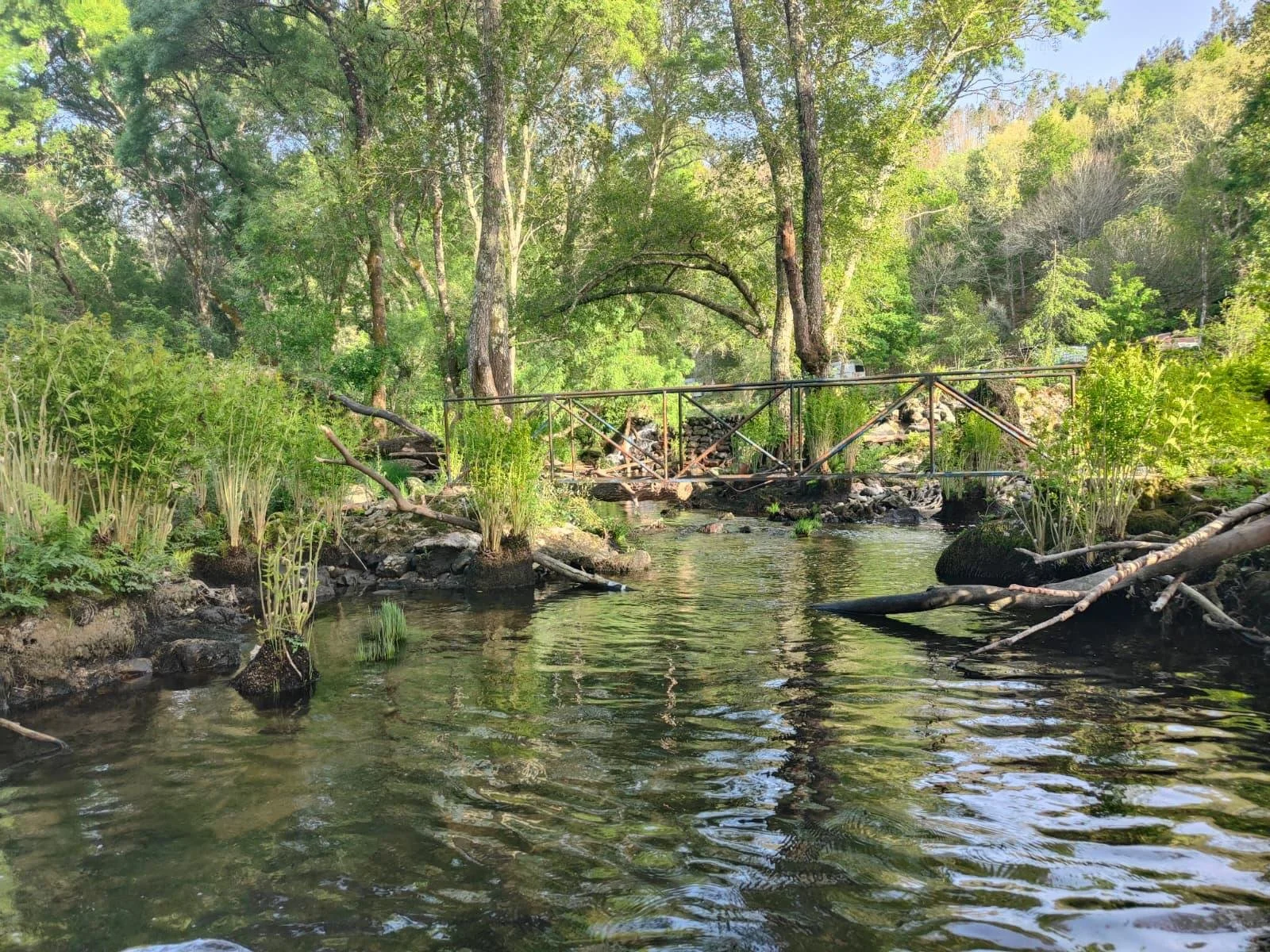
The River Dão is at the heart of Moinhos do Dão. It runs through the valley beneath granite rocks and old trees, creating a cool, green oasis even during the hottest months.
The river has its own microclimate. Its shaded banks stay noticeably cooler, making it a natural place to swim, sit in the shade or simply spend time by the water. In summer, there is nowhere quite like it on the farm for cooling down.
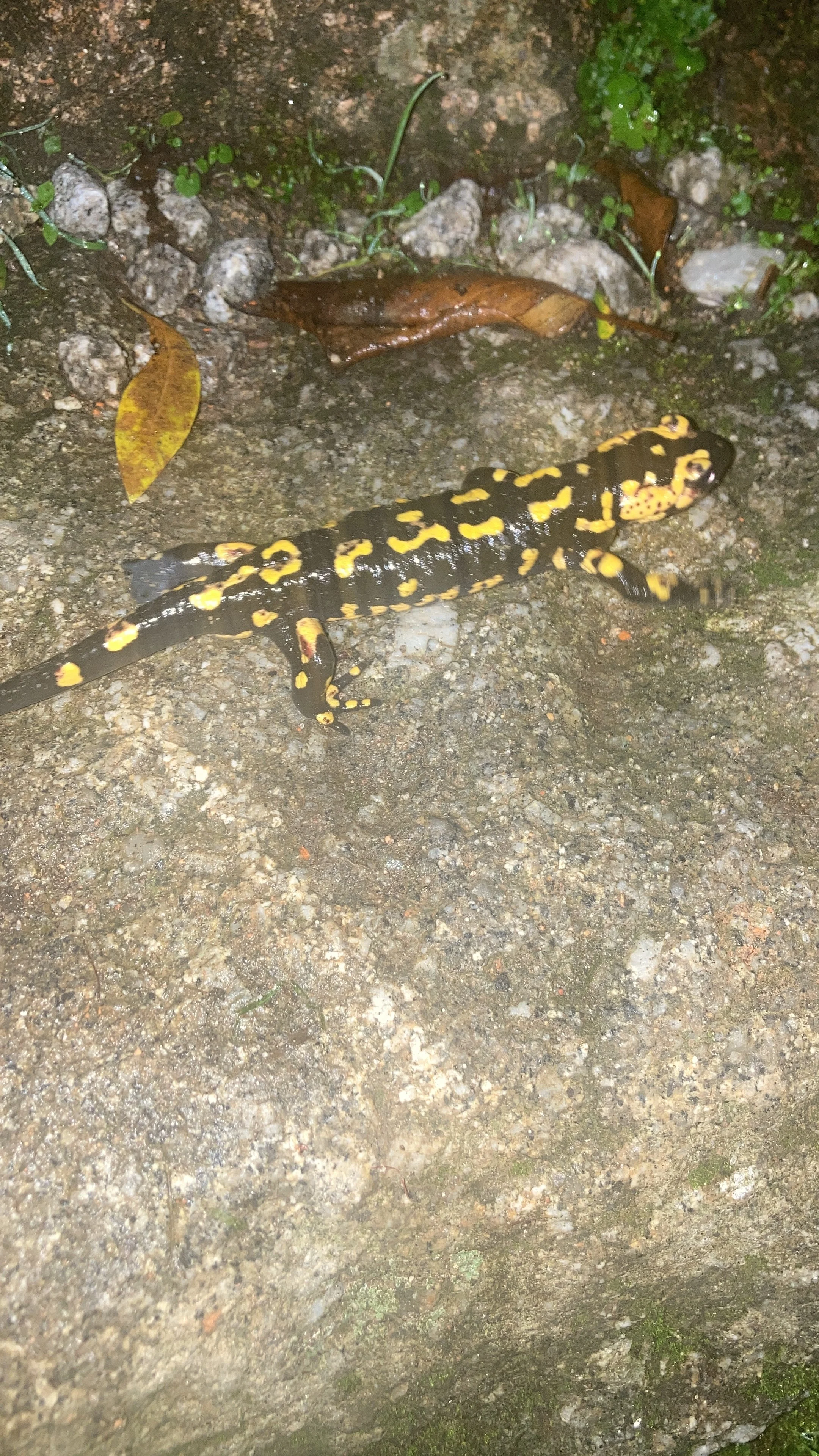
It is also home to an incredible variety of wildlife. Kingfishers can be seen darting across the water, frogs hide among the rocks and vegetation, and otters occasionally pass through. There is always something moving, flying or swimming if you take the time to look.
For those who want to explore, we have small paddle boats to take out on the quieter stretches. Slowly drifting between the trees and rocks, surrounded by dense vegetation and the sounds of the river, can feel almost prehistoric.
A little bit like Jurassic Park — just without the dinosaurs.
Living Off-Grid
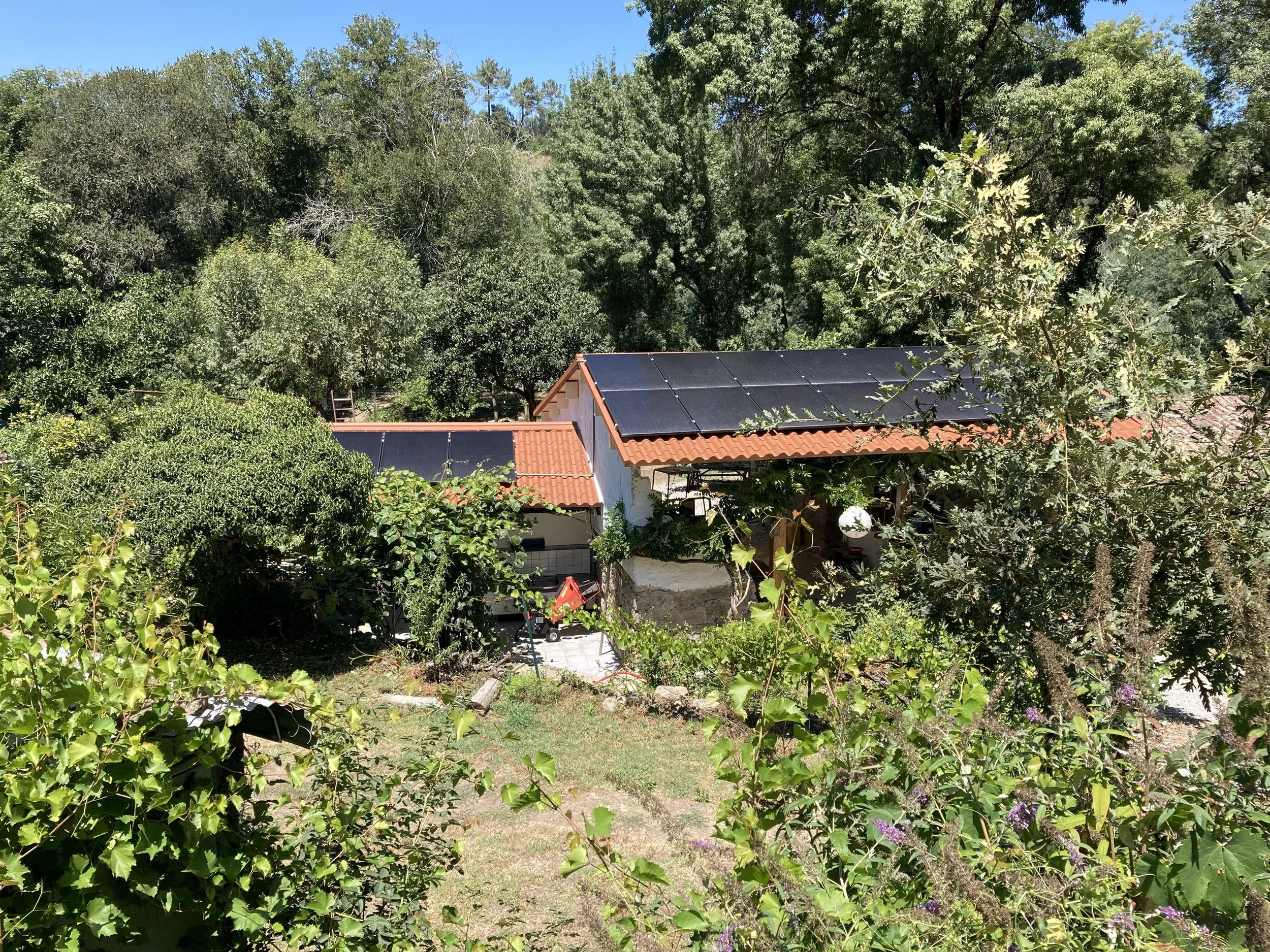
Life at Moinhos do Dão depends on what the land and the weather provide. Our electricity comes from solar power and the river, and our water comes from our own well.
Being off-grid means paying more attention to everyday things. How much water we use, when we run certain machines, how much energy is available, and what we can reuse instead of throwing away.
It also means that things do not always work exactly like they would in a normal house. When there are several cloudy days, there is less solar power. When there is little rain, there is less water in the river. We have to adapt to what is available.
We try to keep things simple, use what we have, repair things when possible and avoid unnecessary waste. It is not about doing everything perfectly or being completely self-sufficient. It is simply a different way of living, with a little more awareness of where our water, energy and food come from.
Living off-grid doesn't mean giving up comfort. It means using resources thoughtfully, reducing waste, and appreciating the independence that comes from a more self-sufficient way of life.
A Place in Constant Restoration
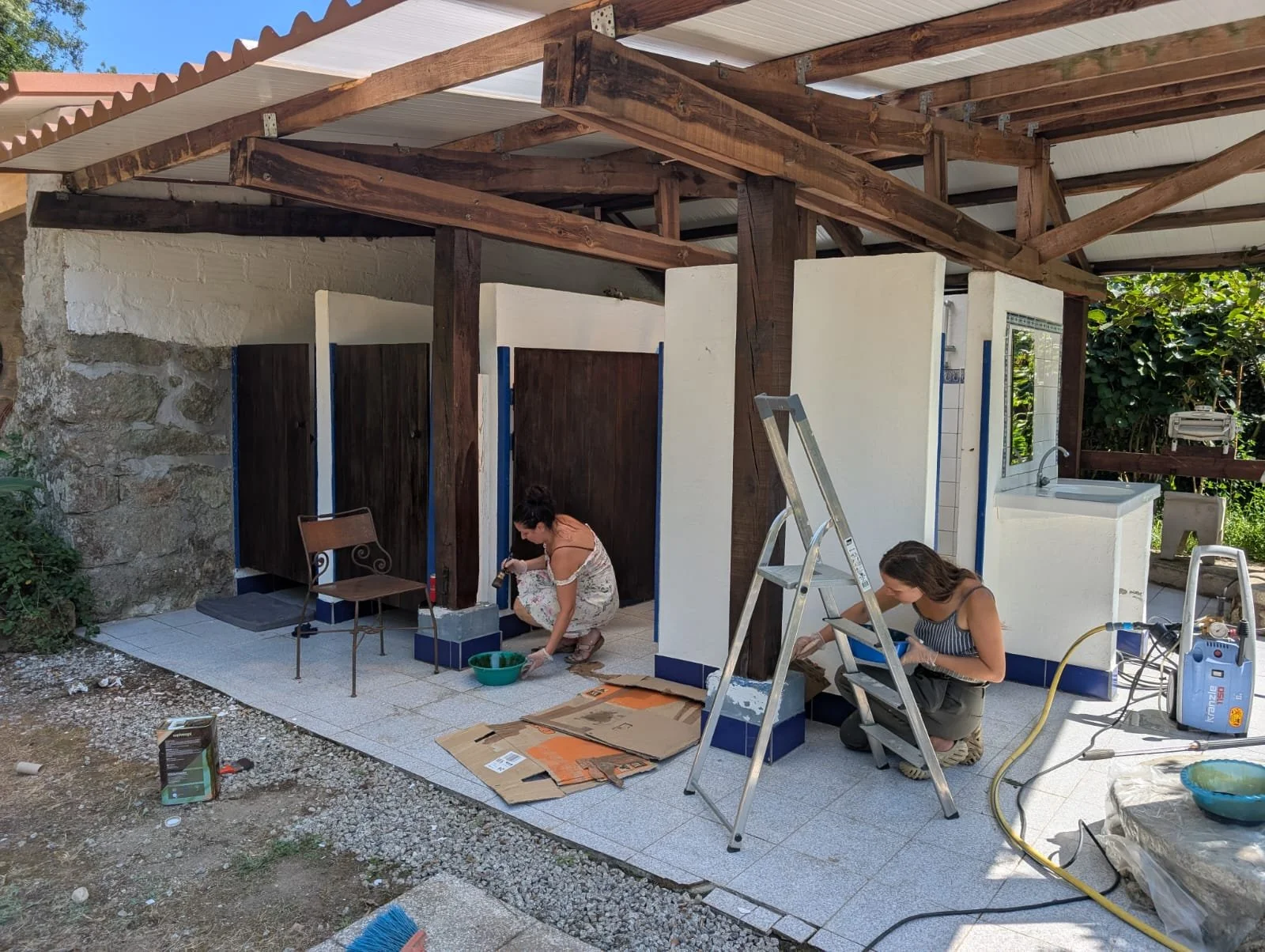
Moinhos do Dão is an old place coming back to life, slowly and naturally.
There is always something to care for — an old stone wall, a water channel, a garden, a roof, a forgotten corner of the land. Some things we restore, some we adapt, and some we simply leave as they are.
We work with what we have, learn as we go, and let the place evolve with the seasons.
It is not finished, and we don't want it to be. Moinhos do Dão is a living project — one that we hope to share with others along the way.
Nature All Around
Beyond the gardens, Moinhos do Dão is surrounded by oak woodland, meadows, riverbanks and granite outcrops. There is always something moving around the place — birds in the trees, frogs in the ponds, butterflies and dragonflies in summer, and many smaller creatures that are easy to overlook.
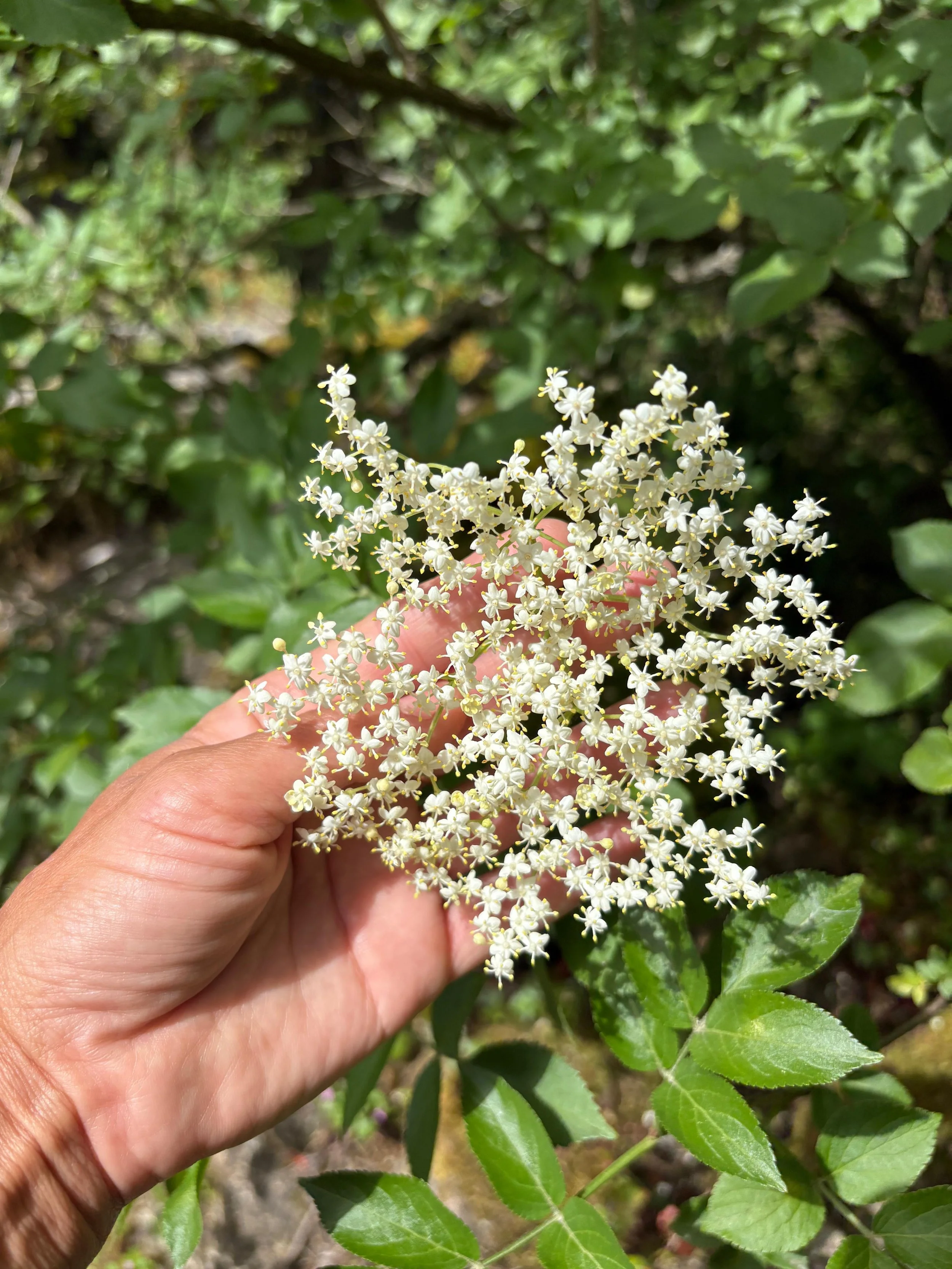
In the gardens, we grow many different plants rather than keeping everything to one type or keeping every area tidy. Vegetables grow alongside herbs and flowers, fruit trees grow between older trees, and plants are allowed to spread where they can.
Not everything is planned. Some things are planted, others appear on their own. We leave parts of the garden wild, let some plants flower and go to seed, and try not to interfere too much.
The landscape changes constantly with the seasons. Things grow, disappear, come back and sometimes take over a little more space than intended. That's simply part of life here.
Through the Seasons
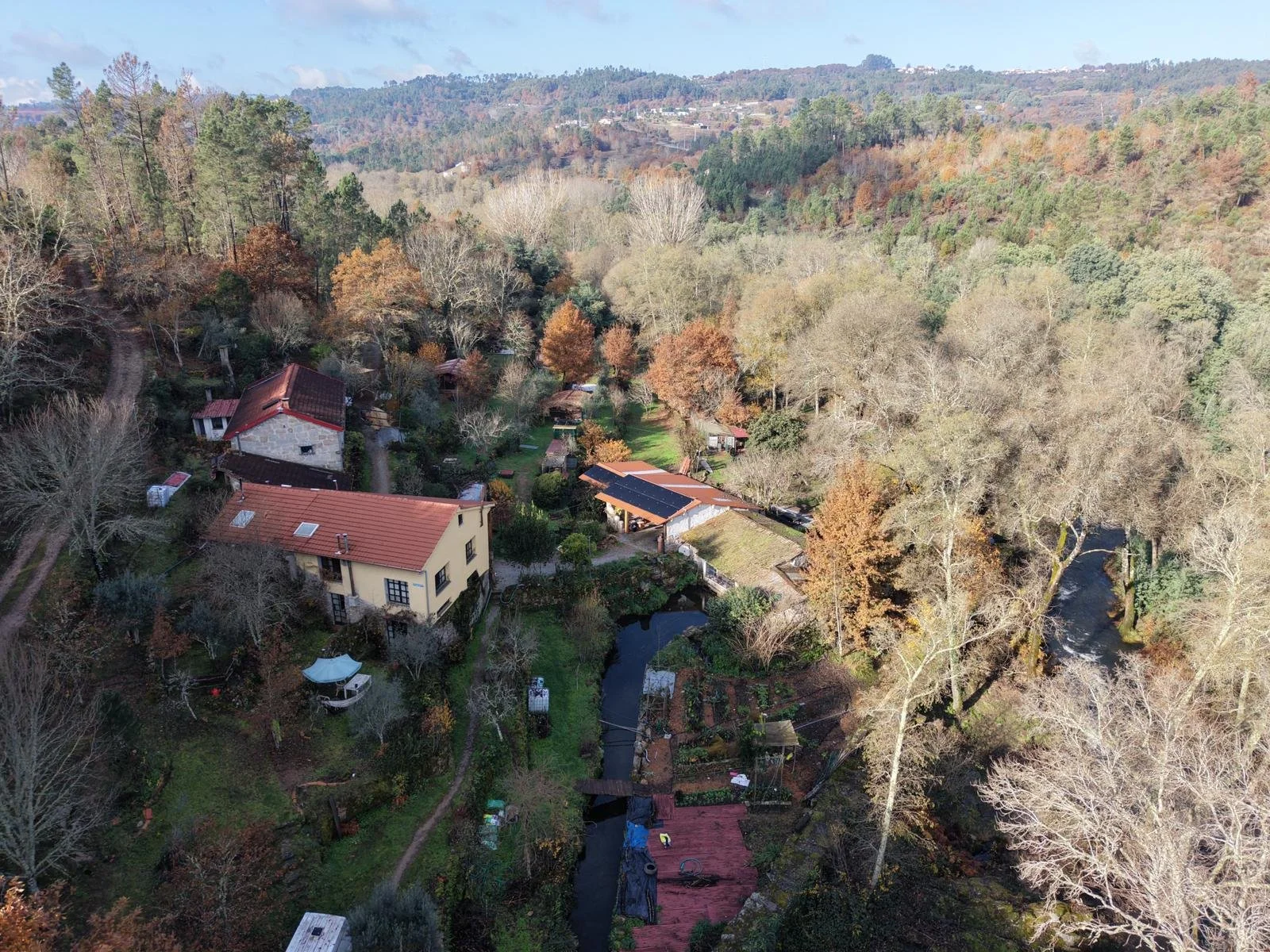
Moinhos do Dão changes with the seasons. The river, gardens, trees and farm work all follow their own rhythm.
Spring is when things start growing again. The hills turn green, wild flowers appear, the river carries more water and the gardens are prepared for planting. Seeds go in, beds are prepared and the first vegetables begin to come through.
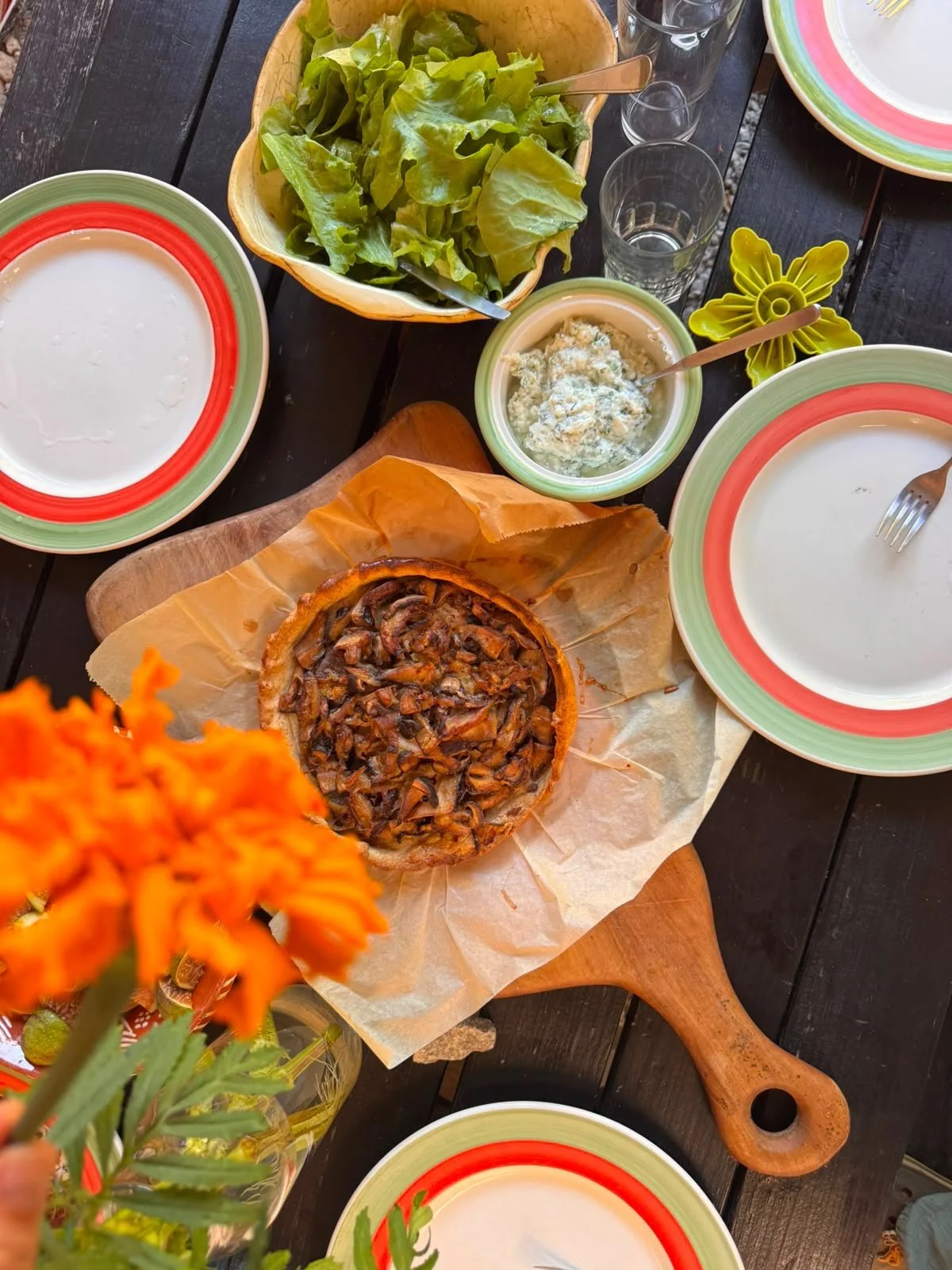
Summer is the busiest time in the gardens. Tomatoes, courgettes, herbs, fruit and flowers are ready to pick, often faster than we can use them. The days are long and there is work in the garden early and late, with time in between for a swim in the river or a walk through the woods.
Autumn is harvest and preserving time. There are fruits and vegetables to collect, jars to fill and seeds to save. The oak trees slowly change colour and the evenings become cooler. There is still plenty to do outside, but the pace starts to slow.
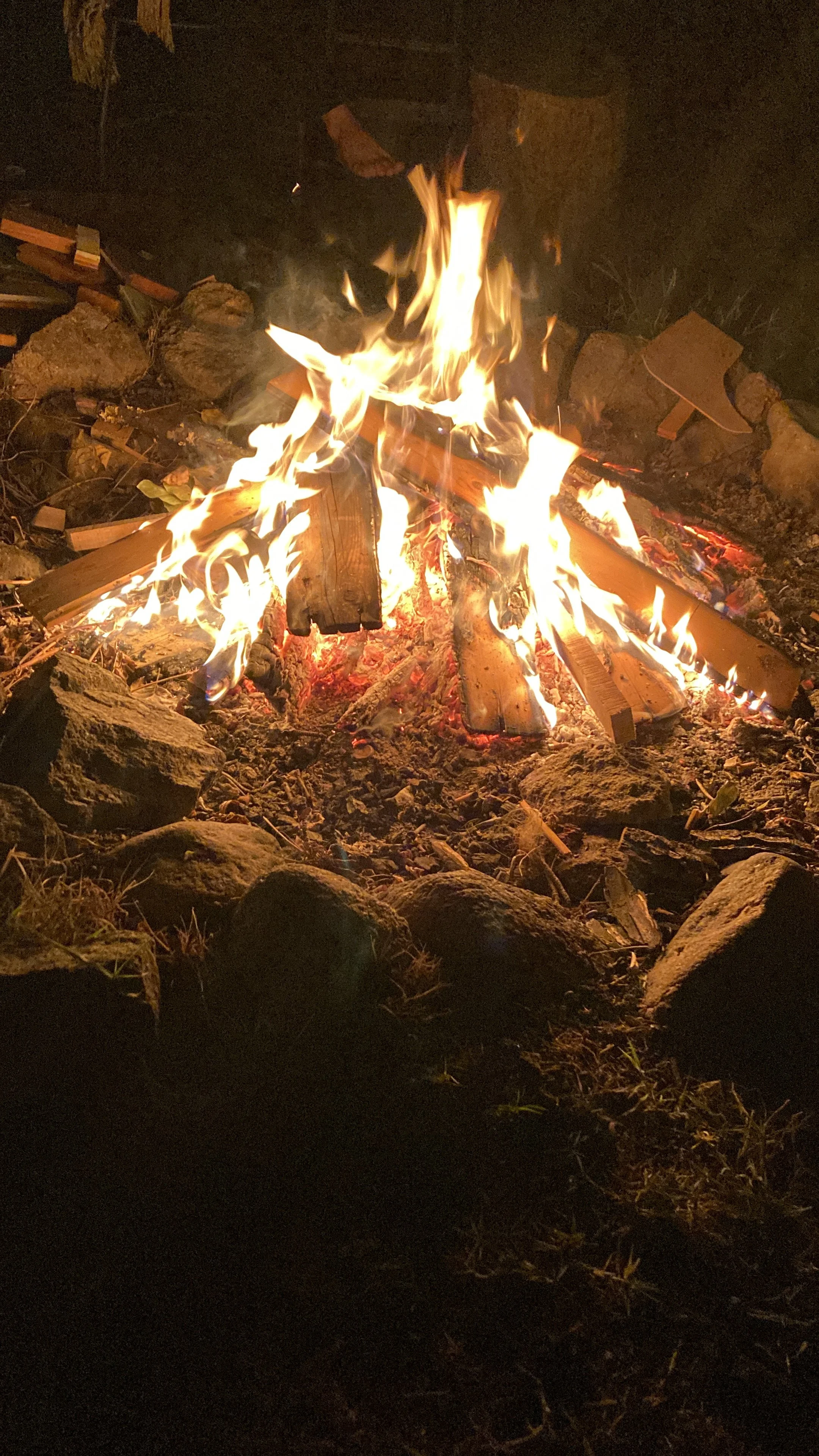
Winter is definetly quieter. The gardens rest and the river is often fuller. We spend more time repairing things, pruning, clearing, working on the old buildings and preparing for the next growing season. Some days are spent outside, others around the fire.
A Valley Worth Preserving
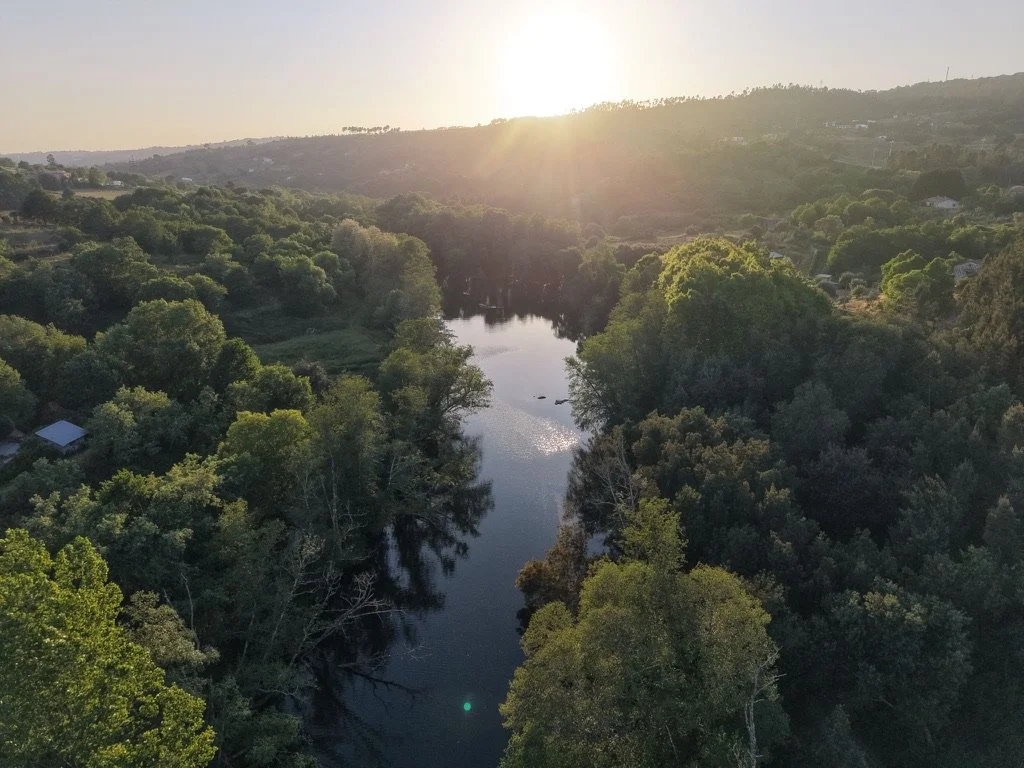
Moinhos do Dão is an old farm beside the Dão River. The river once powered the watermills here, and the old millstones, stone buildings and water channels are still part of the property.
Today, we grow vegetables, fruit, herbs and flowers, look after the gardens and work on the old buildings. Some have already been restored; others still need work.
The place changes a lot with the seasons. In winter, the river is usually fuller and the land turns green. In summer, the river becomes a place to swim, while the gardens need regular watering and attention.
Not everything is cultivated. Wild plants grow between the gardens, old trees are left standing where we can, and animals move through the gardens and woodland.
There is always something to repair, grow, clear, preserve or simply leave alone. This is what living here looks like.