What we grow,
we eat.
The Garden
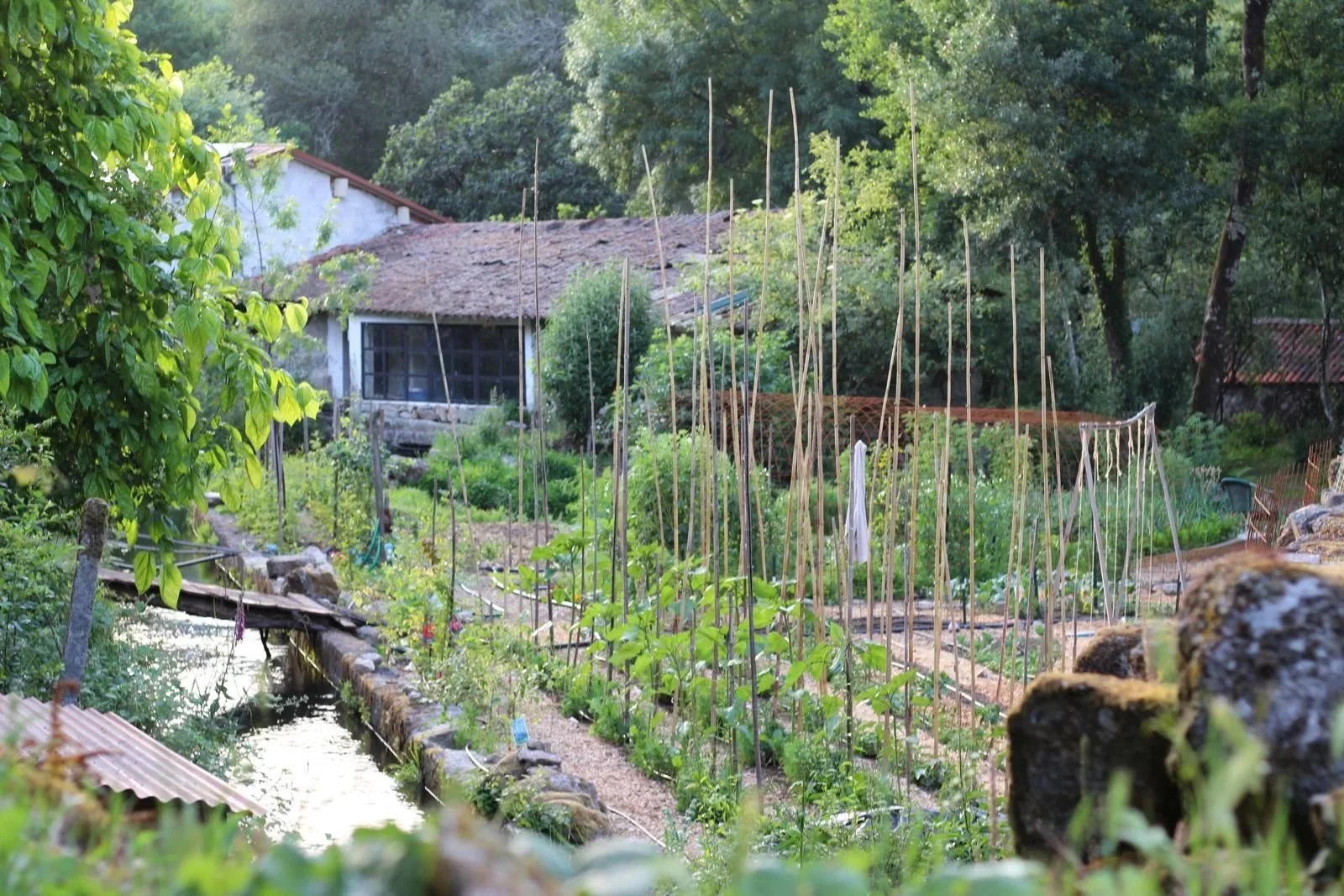
Our garden sits in a beautiful triangle between the River Dão and one of the old mill channels, protected by a very old stone wall. With the river on one side and the channel on the other, it is sheltered, warm and a little bit of a sun trap.
When we arrived, it was completely overgrown. Within one year, using Charles Dowding’s no-dig method, lots of mulch and Jess’s careful way of planning the space, it has become a garden that provides us with our own vegetables. It now feeds us and often our visitors, friends, family and volunteers too.
There is always something happening here. In spring, we plant and make new plans. Summer is full of watering, harvesting and trying to keep up with everything that grows. In autumn, we collect seeds and preserve food for the colder months.
The garden is a big part of the Moinhos Experience. We have learned a lot by doing it ourselves, and we are happy to share these skills with anyone who is interested. Have a look around, ask questions, help pick herbs for lunch or harvest something that is ready. There is almost always something to plant, something to harvest and something new to learn.
We don't dig much.
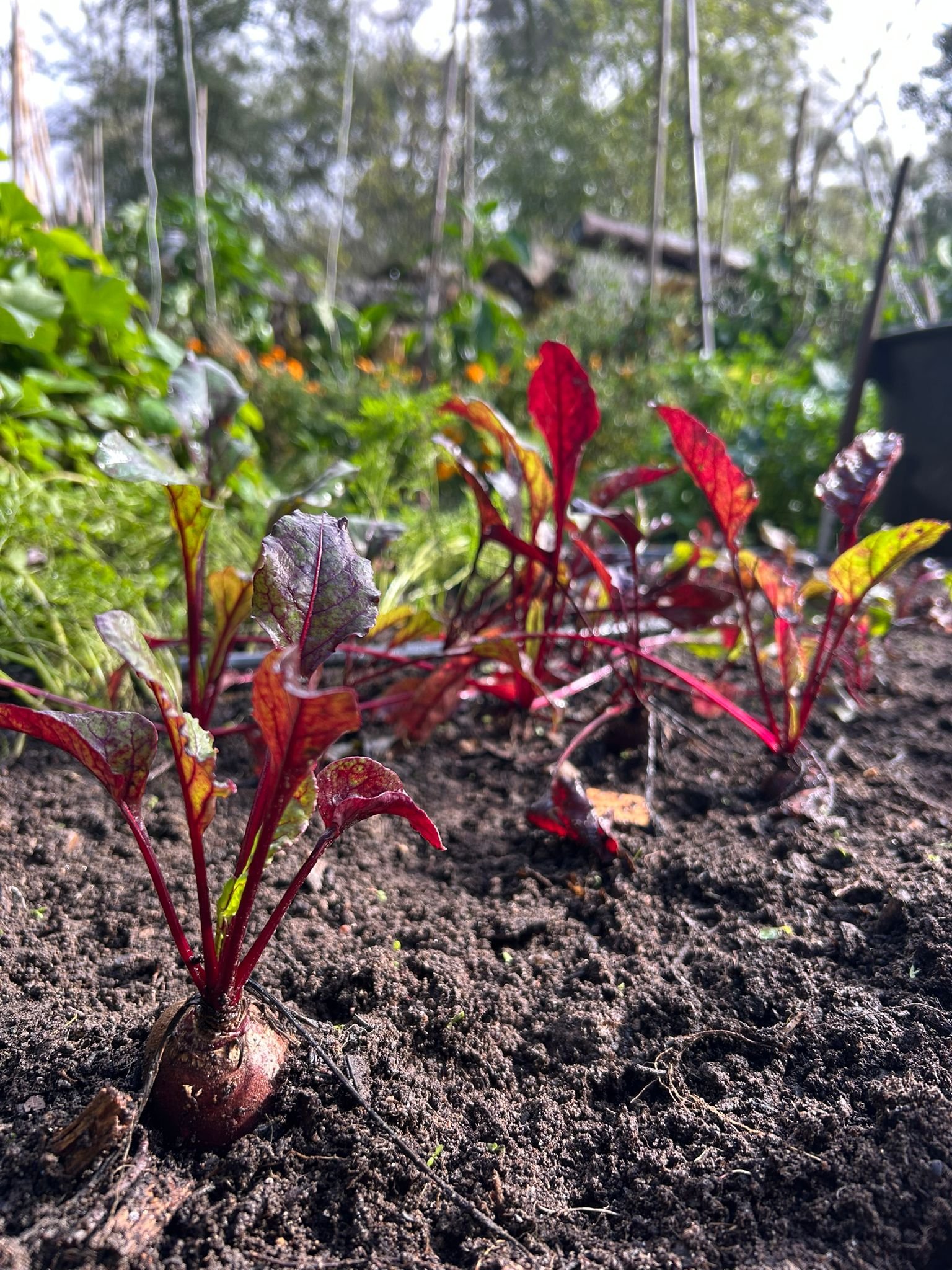
We do not turn the soil over every year. Instead, we feed it with compost, mulch and whatever organic material we have, then let the soil underneath do its thing. It means less digging for us, which is always a bonus. And when you put your hands into the soil here, you understand why: it is dark, alive and smells incredibly good.
We grow upwards when we can.
We do not have endless space in the garden, so we grow upwards wherever we can.
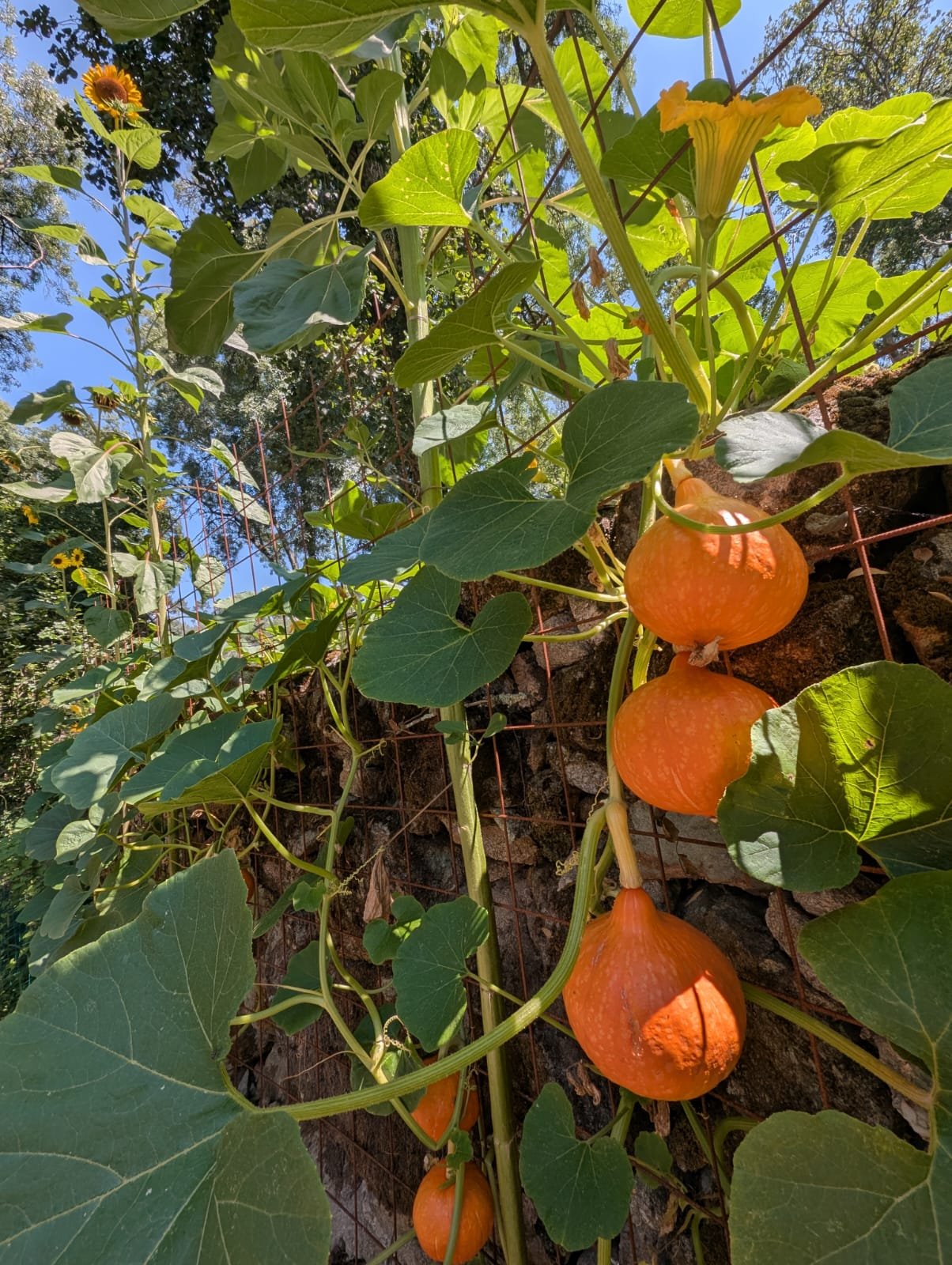
Beans, cucumbers, tomatoes and squash climb fences, arches and anything else that can hold them. We have a tunnel for beans and passion fruit, while pumpkins and cucumbers grow up the old stone wall.
Growing this way gives us more space and lets the garden become a little wild and full. It is also part of the Moinhos Experience: you can walk through the bean tunnel, see how we use the old walls and pick something fresh for your meal.
There is nothing like eating a ripe tomato or a handful of berries straight from the garden.
We keep planting.
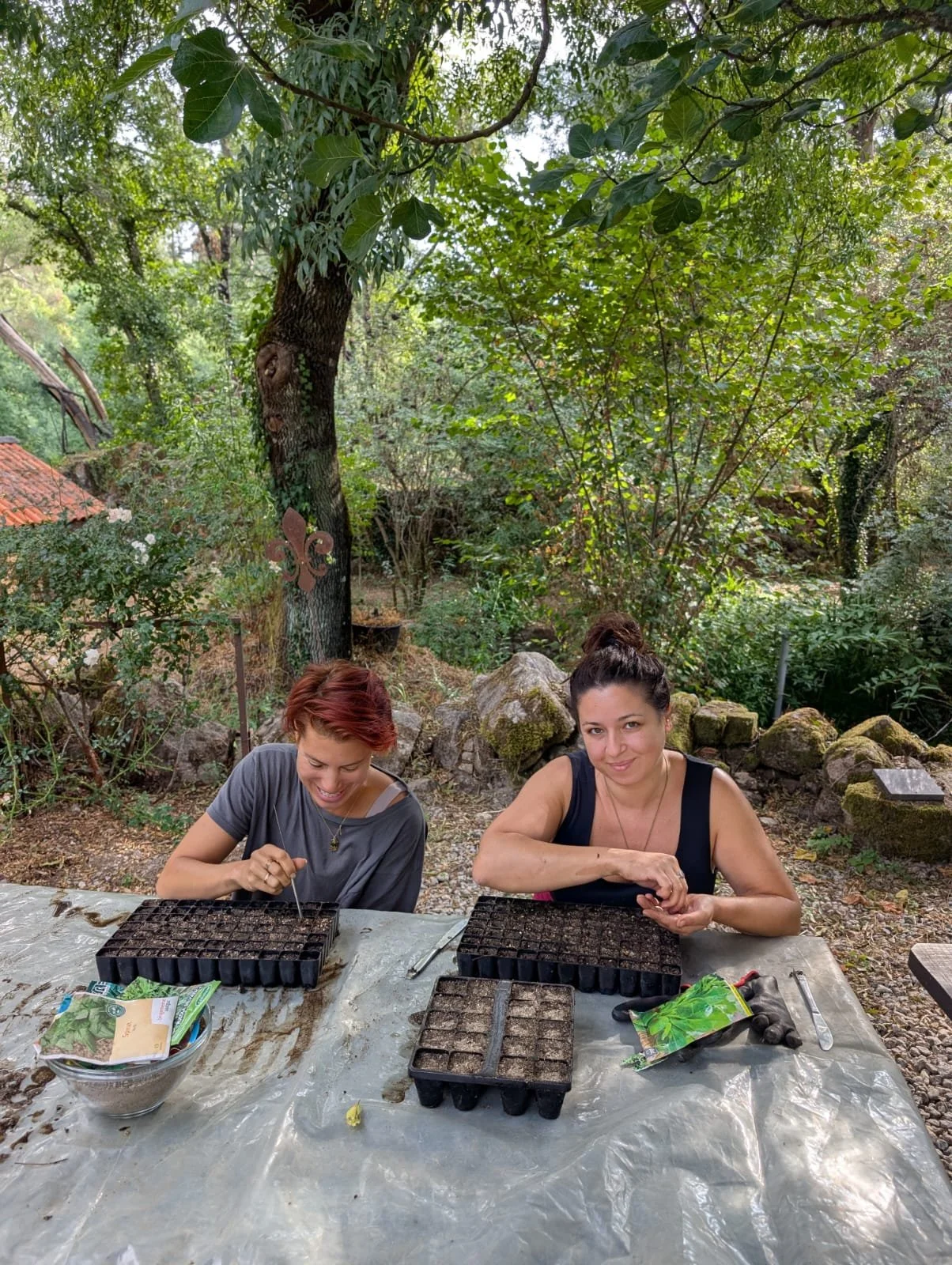
We do not plant everything at once. Our garden is always in motion: while one bed is full and ready to harvest, another is resting under mulch, and somewhere else new seeds are already starting their journey.
Throughout the year, we sow, pot up young plants and put them into the beds whenever there is space and the season feels right. This way, the garden keeps giving us food instead of producing everything at the same time.
It is a simple rhythm, but it is a big part of what makes Moinhos special. Every seed, every small plant and every empty bed is part of our wish to grow more of our own food and become a little more self-sufficient.
If you are here at the right time, you can join the magic — sow a few seeds, help plant the next bed and see the garden in the middle of its everyday work.
Companion Planting
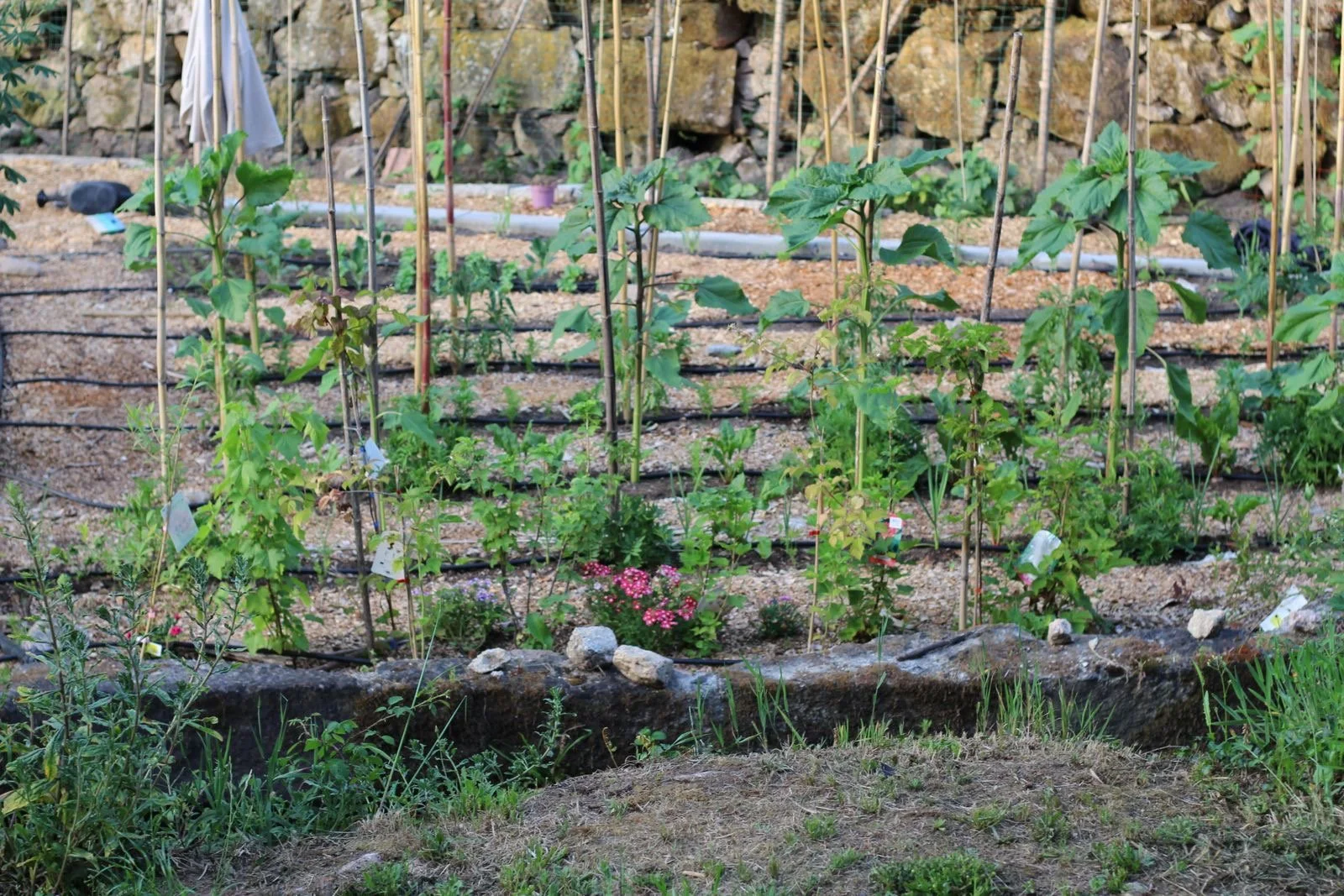
Our garden is not built in neat rows, with one kind of plant in each bed. We prefer to mix things: vegetables, herbs, flowers and a few wild plants growing close together.
We call it our cottage mosaic garden. Every bed looks a little different, depending on what we have, what needs a place and what has decided to appear by itself. A tomato may grow beside basil and flowers; beans may climb through something that gives them structure.
We are learning by watching. Which plants help each other, which ones need more space, and which combinations simply feel right in this garden. It is not a perfect system — it is a living experiment that becomes more colourful and interesting every year.
Composting & Soil Building
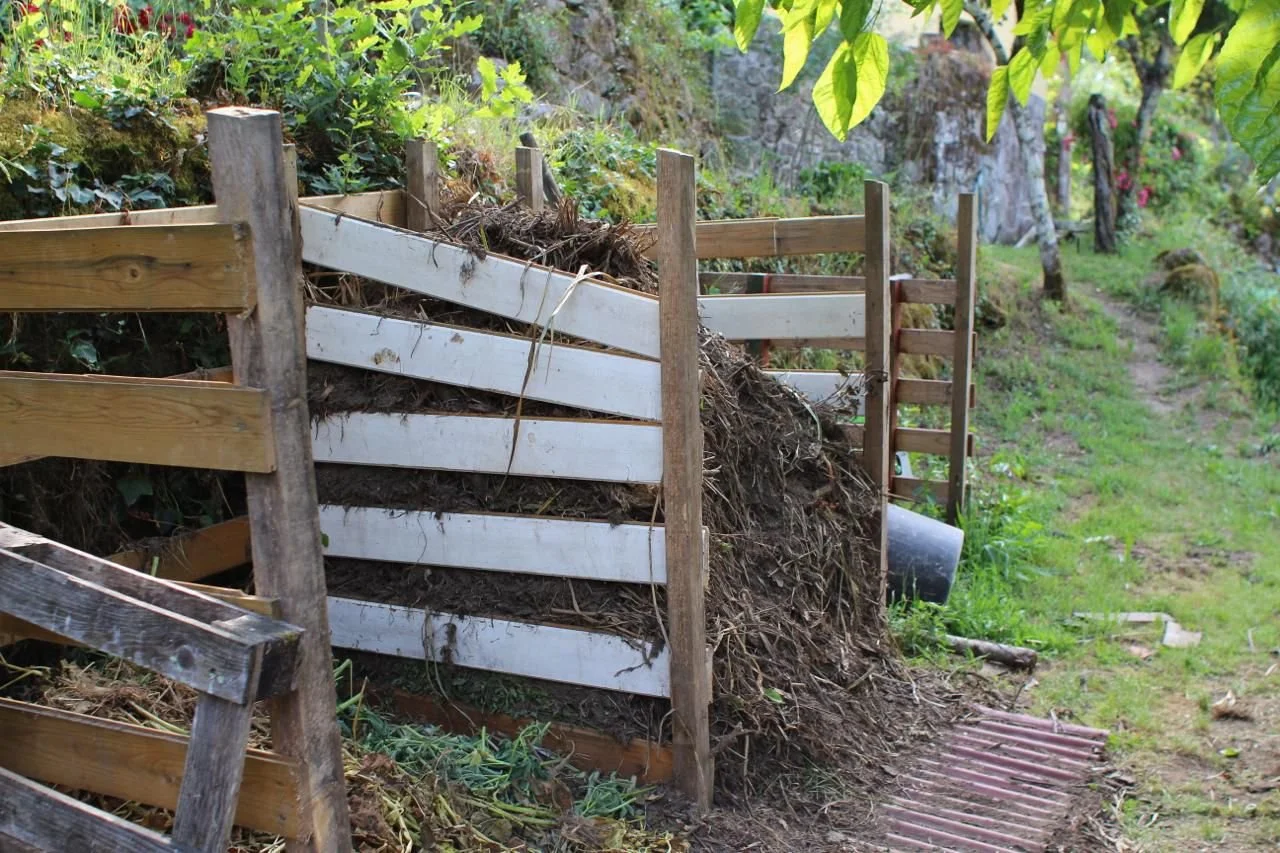
At Moinhos, very little from the garden goes to waste. What we harvest feeds us; what is left behind often finds its way back into the soil.
We compost plant material, cover the beds with mulch and use whatever organic matter we have. Anything that does not go into the compost usually goes to the chickens. They turn it into happy chicken food — and eventually, it comes back to the garden in another form.
Good soil takes time. But after only one year, we can already feel and see the difference: a new, rich layer of topsoil, darker beds and plants that have a much better place to grow. It is slow work, but it may be the most important thing we do in the garden.
Water-Wise Gardening
Summer asks the most of the garden here. The sun is strong, the days are long and the soil can dry out very quickly.
Mulch helps us keep the moisture in the soil, and we choose plants that can cope with the heat. But our real superpower is the river. Through the old channels, the River Dão gives us water for the garden throughout the year.
We use a simple drip-irrigation system, bringing water directly to the roots where it is needed. It helps us use less water, waste less and keep the garden growing through the hottest part of summer.
The garden isn't just ours
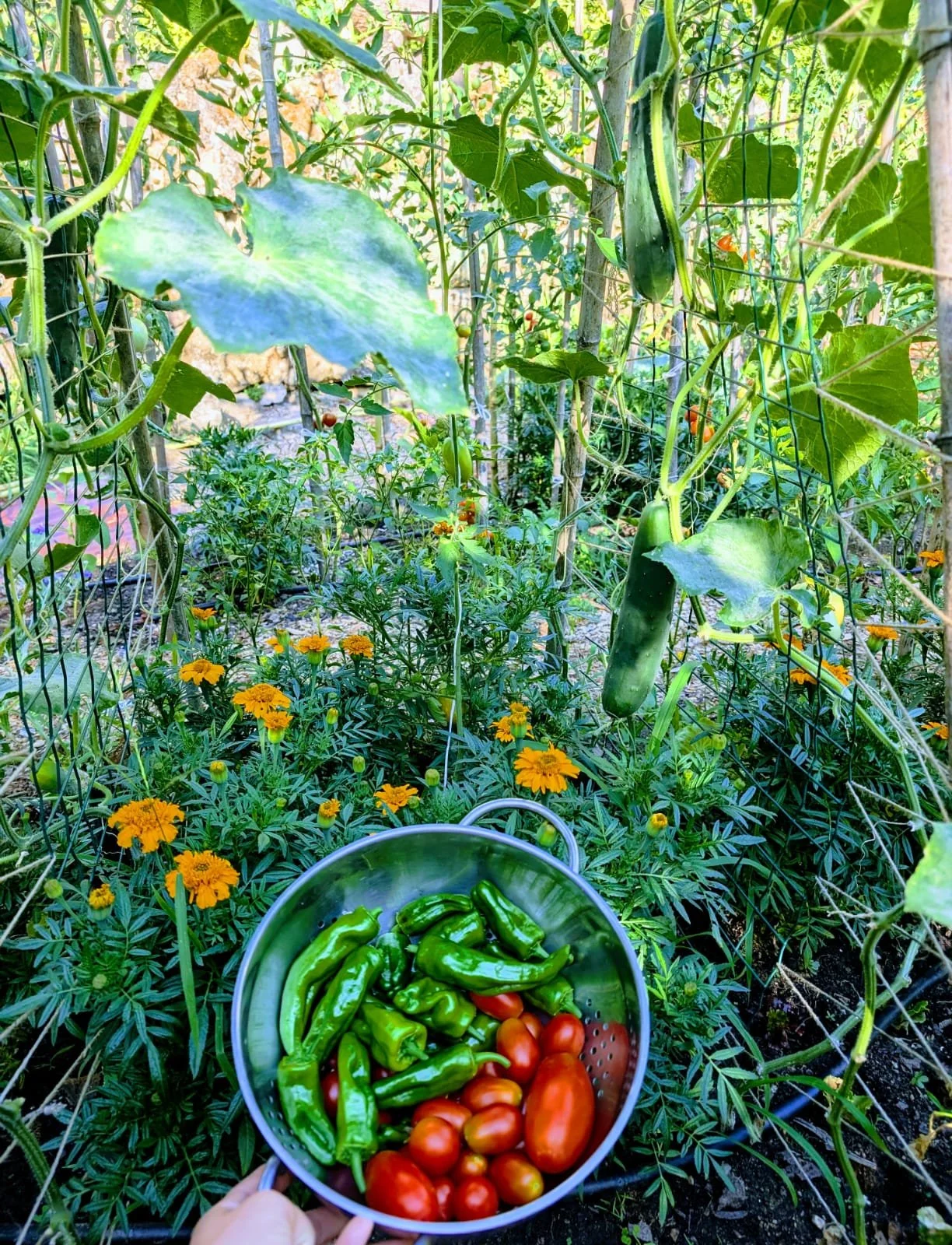
The garden is shared with many other lives. Bees move between the flowers, butterflies rest in the sun, birds look for insects, and frogs and lizards hide between the stones and plants.
We are creating a cottage mosaic garden, where vegetables, herbs, flowers and wild plants grow next to each other. It is not meant to look perfectly tidy. A few wild corners, old leaves and plants that grow where they choose all give insects and small animals a place to live.
The more alive the garden feels, the better it seems to grow.
Keep Growing!
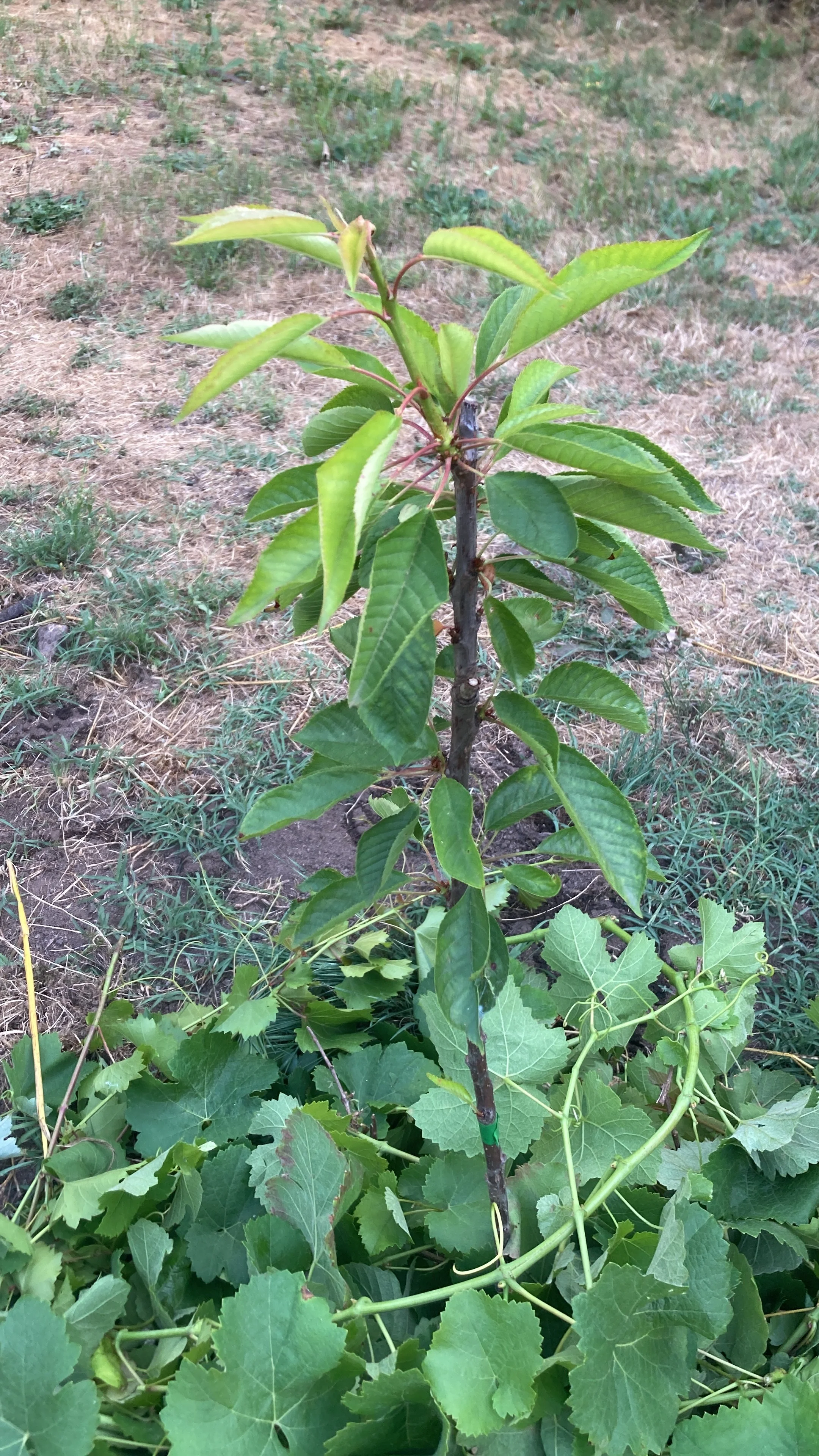
Beyond the main garden, Moinhos has around two hectares of land to explore and care for. There is a herb garden, many lines of fruit trees and more food growing here than we can name in one list: apples, plums, quinces, chestnuts, grapes, oranges, pears, olives, haselnuts, cherrys, tangerines, kiwis, almonds, lemos, figs, peaches and more!
There is something to harvest, eat or preserve almost all year round. Sometimes it is only a handful of herbs or a few ripe figs; at other times, the kitchen fills with baskets of fruit waiting to be turned into jam, chutney, juice or simply shared around the table.
From the garden to the table
At Moinhos, the garden often decides what we cook.
We walk out to see what is ready, pick what we need and bring it straight to the kitchen. A meal might begin with a basket of tomatoes, a handful of herbs, courgettes that grew too quickly, or fruit falling from the trees.
Some things are eaten straight away. Others are made into soup, sauces, pickles, chutneys or jam. When there is more than we can eat, we dry herbs, fruit and vegetables, make juice or fill jars for later.
We are conscious about what we eat. Food feels best when we know where it comes from — when we have grown it with love, picked it ourselves and shared it around the table.